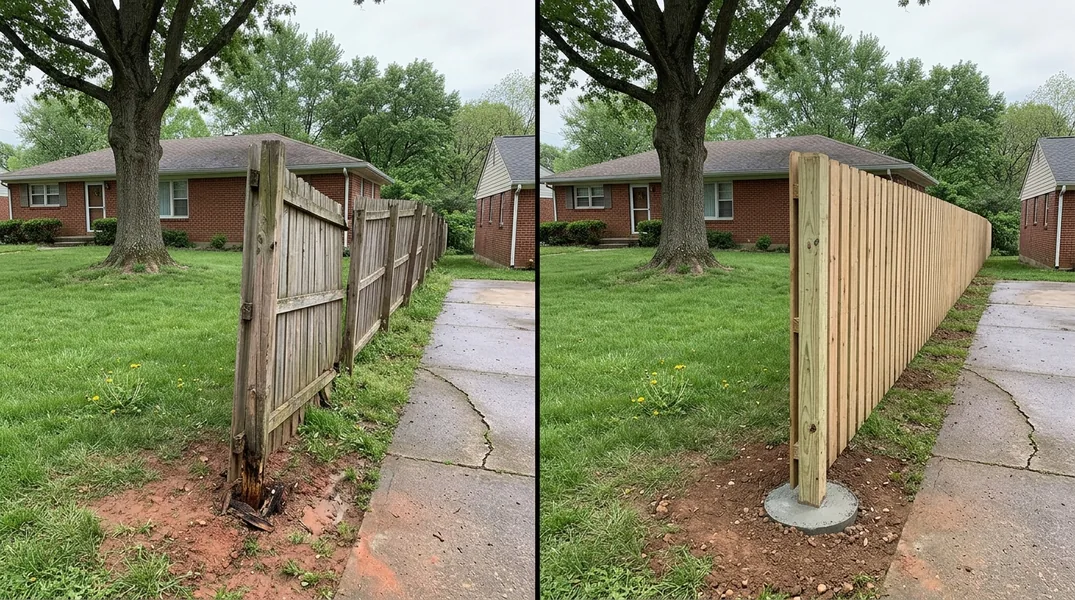
The Freeze-Thaw Cycle: Why Your Fence Posts Shift Each Winter
If you've noticed your fence leaning or fence posts tilting after a harsh winter in Lexington, you're not alone. The culprit is often the freeze-thaw cycle that defines Kentucky winters. When moisture in the soil around your fence post freezes, it expands. When it thaws, the soil contracts. Over months and years, this constant movement pushes posts upward and sideways, a phenomenon known as frost heave fence posts.
Frost heave is particularly aggressive in Lexington because of our region's unique soil composition and moisture patterns. Posts that were perfectly vertical in fall can shift several inches by spring. This movement weakens the structural integrity of your entire fence line, creating gaps, sagging rails, and eventually a fence that no longer serves its purpose for privacy or security. The deeper your posts are set and the better your drainage, the less severe frost heave becomes, but without proper installation and maintenance, even well-built fences can lean over time.
Bluegrass Clay and Limestone: Lexington's Unique Soil Challenge
Lexington sits in the heart of Kentucky's Bluegrass region, famous for its rich soil and lush pastures. However, that same soil composition creates specific challenges for fence installation and longevity. The clay-heavy soil common throughout the area holds moisture exceptionally well, which means water doesn't drain away from fence posts as quickly as it would in sandier soils. This extended contact between water and wood accelerates rotting and makes frost heave more pronounced during freeze-thaw cycles.
Beneath the clay lies another layer of complexity: limestone bedrock. While limestone is excellent for the region's agriculture and water quality, it affects how water moves through soil and how posts settle over time. When you combine moisture-retaining clay with limestone-influenced drainage patterns and freeze-thaw stress, fence posts face a triple threat. Rotted fence post repair becomes necessary more frequently in our region than in areas with different soil profiles. This is why choosing the right installation method and material for Wood & Privacy Fence Installation is so critical for long-term durability. Posts set too shallow or in poorly drained locations will fail faster, leading to leaning fences and costly repairs down the road.
Signs Your Fence Posts Need Attention: Early Detection Saves Money
Catching fence problems early is the best way to avoid expensive full-fence replacement. The first sign of trouble is usually a visible lean in one or more sections of your fence. If you notice fence posts tilting away from vertical, especially after winter, that's your cue to investigate. Walk along your fence line and gently push on rails and posts. Excessive movement or soft, spongy wood indicates rotted fence post damage that requires immediate attention.
Look for other warning signs as well: dark staining on the lower portions of posts, gaps opening between boards, or rails that no longer sit flush against posts. These symptoms suggest that frost heave fence posts and wood rot are working together to compromise your fence. Don't wait for your neighbor to comment on your leaning fence or for a section to collapse. Early leaning fence repair is faster, more affordable, and prevents damage from spreading to adjacent sections. If you spot any of these issues, reach out to Lexington Fence at (859) 407-6106 for a professional assessment.
Leaning Fence Repair: Solutions That Actually Work
Repairing a leaning fence depends on the underlying cause and severity of the damage. If frost heave fence posts have simply shifted position but the wood itself is still sound, a professional contractor can often reset the post by excavating around it, re-leveling, and re-compacting the soil with proper drainage measures. This approach is cost-effective and preserves the existing fence structure. However, if your posts are rotted, reset alone won't solve the problem because the wood is compromised and will continue to fail.
For rotted fence post repair, the standard solution is partial or complete post replacement. A qualified fence contractor will remove the damaged section of the post, install a new pressure-treated post at the correct depth with proper concrete footing, and ensure adequate drainage to prevent future rot. In some cases, where only the below-ground portion of the post is rotted, a technique called post splicing can extend the life of your fence without full replacement. The key to any successful leaning fence repair is addressing the root cause: moisture, drainage, and frost heave prevention. Lexington Fence specializes in diagnosing these issues and recommending the most cost-effective solution for your situation.
Prevention: How to Protect Your Fence from Frost Heave and Rot
The best remedy for fence problems is prevention. When you invest in new Wood & Privacy Fence Installation, proper post installation is everything. Posts should be set at least 3 feet deep in Lexington's soil, anchored in concrete footings that extend below the frost line. Concrete creates a barrier that reduces water absorption into the soil immediately around the post and helps distribute freeze-thaw stress more evenly. Pressure-treated lumber resists rot far better than untreated wood, and selecting the right grade of pressure-treated material ensures decades of service in our climate.
Drainage is equally important. Water should flow away from the fence line, not collect around posts. If your property has poor drainage or tends to stay wet, consider installing a French drain or gravel trench along your fence line to direct water away. Regular maintenance also helps: inspect your fence each spring and fall, trim vegetation that traps moisture against posts, and address small problems before they become major repairs. When you're ready to install a new fence or repair an existing one, contact Lexington Fence at (859) 407-6106 or request a free estimate to discuss the best options for your property and budget.
When to Call a Professional for Leaning Fence Repair Near Me
While some homeowners enjoy DIY projects, fence repair often requires professional expertise and equipment. Diagnosing whether your fence is leaning due to frost heave, rot, settling, or a combination of factors requires experience. A professional contractor can also ensure that repairs meet local building codes and are done safely. Attempting to reset a heavy fence post or dig deep footings without proper tools and knowledge can result in injury or a repair that fails within a season.
Lexington Fence has served the Lexington community for years, helping homeowners understand their fence problems and providing reliable, lasting solutions. Whether you need leaning fence repair, rotted fence post repair, or a complete fence replacement, our team has the expertise to handle Lexington's unique soil and climate challenges. Call (859) 407-6106 today to schedule your free estimate and get your fence standing straight and strong again.
Looking for a professional fence contractor in Lexington? Lexington Fence responds fast for all your fence needs.
Get a Free Quote