Fence Company in Lexington, KY: Installation, Repair & Gates
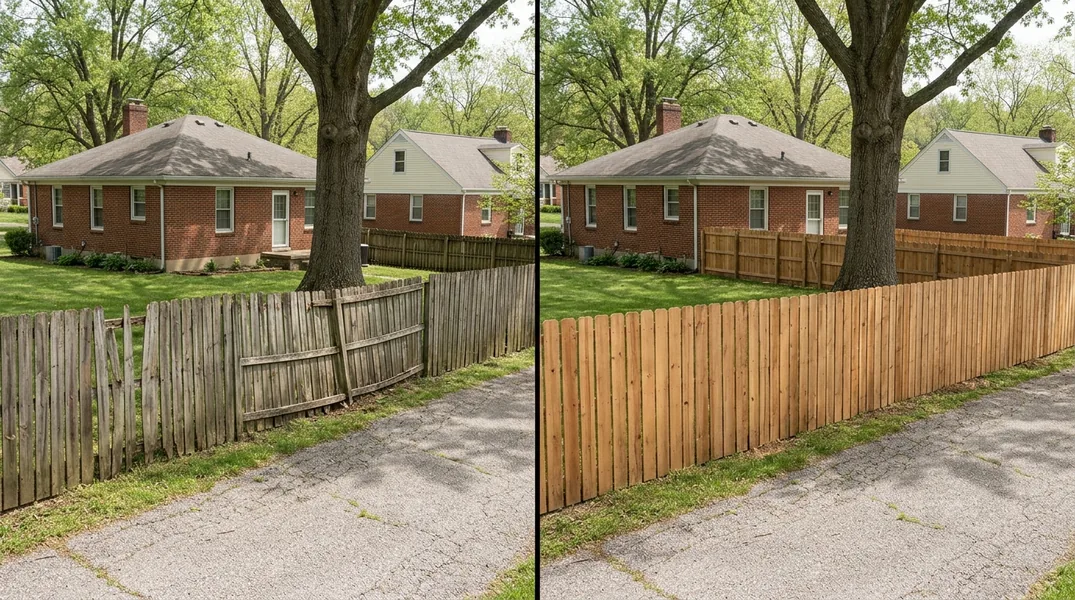
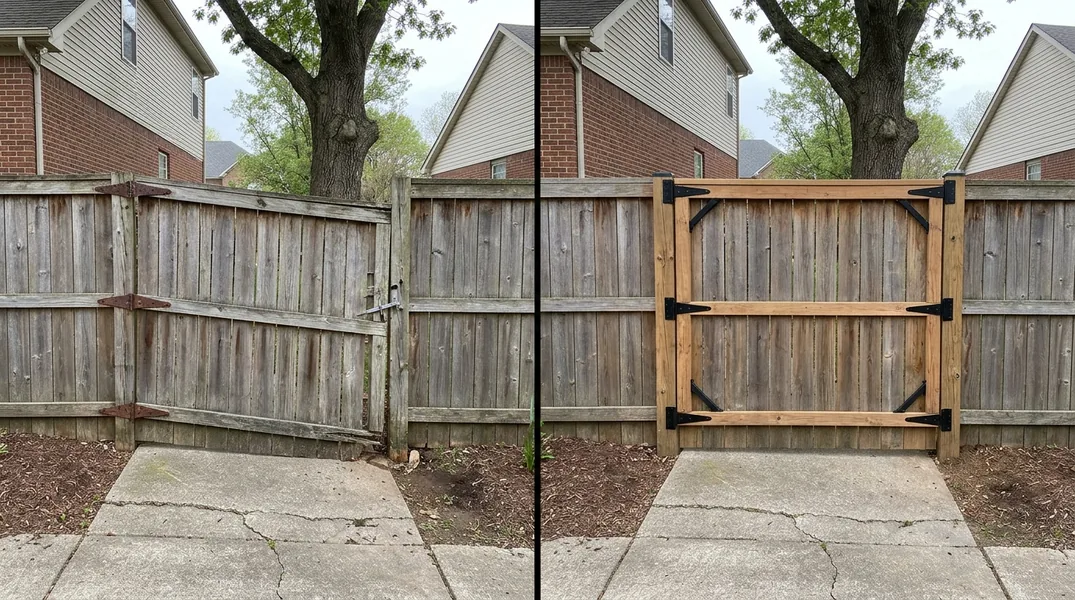
Lexington Fence serves homeowners across Lexington, Georgetown, Nicholasville and the surrounding Bluegrass area with the full range of fence work: new installation in wood privacy fence, vinyl, chain link and ornamental metal; repair of leaning and damaged sections; gate installation and automatic driveway gates; and storm damage assessment and rebuilding. We are a local fence company, not a national franchise. The same crews who quote your job do the work, and they know this soil, this climate and the fencing you see in every neighborhood from Chevy Chase to Hamburg to Masterson Station.
The Bluegrass sits on clay that swells when wet and shrinks when dry, Gulf humidity keeps wood damp at the ground line, and spring and summer storms knock panels flat and snap posts at grade. Every fence here faces the same seasonal stresses, and most of the leaning fences we see are not a panel problem but a post problem. Call (859) 407-6106 for a free estimate, or read more about fence repair to understand what we actually find when we walk a fence line.
Why Fences Lean in Lexington: Clay Soil and Rotted Posts
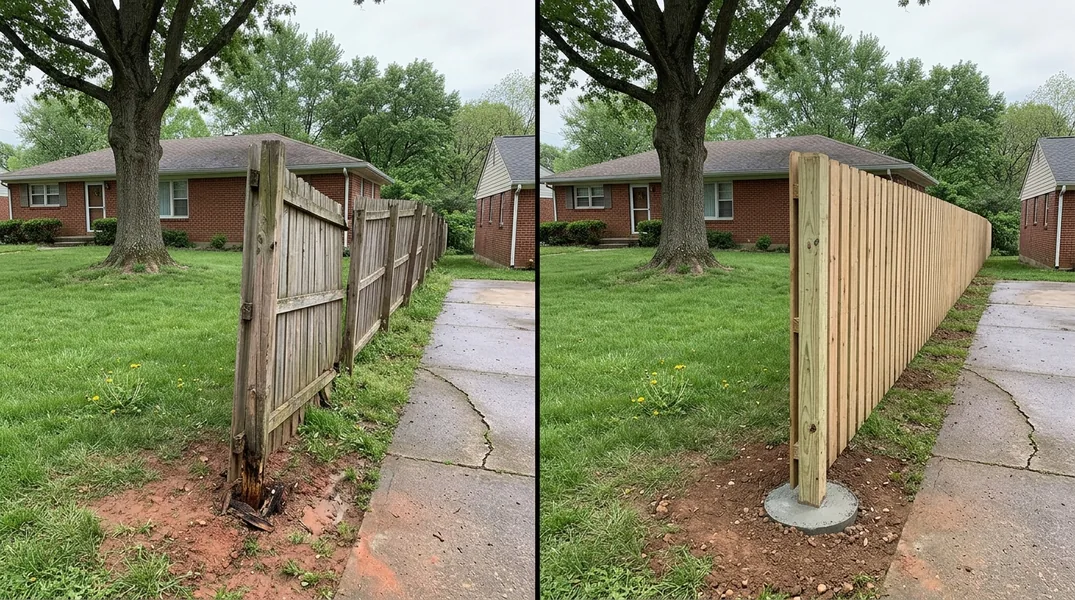
A fence leans here because of the ground and the weather, not usually because the panels failed. Our clay soil swells when spring rains soak it and shrinks when summer heat dries it out, and that back-and-forth movement works a post back and forth in its hole season after season until the fence racks out of plumb. At the same time, humidity keeps the wood damp right at the ground line, exactly where the post carries the load, and that moisture causes decay. Over time a post weakens, the fence starts to lean, and the homeowner calls. The honest assessment takes time: we walk the whole fence line, not just the section that moved, and we test every post rather than the one that was pointed out. We check whether the concrete footing itself has heaved or whether the post has failed inside a sound footing. That tells us what will actually hold and what will not.
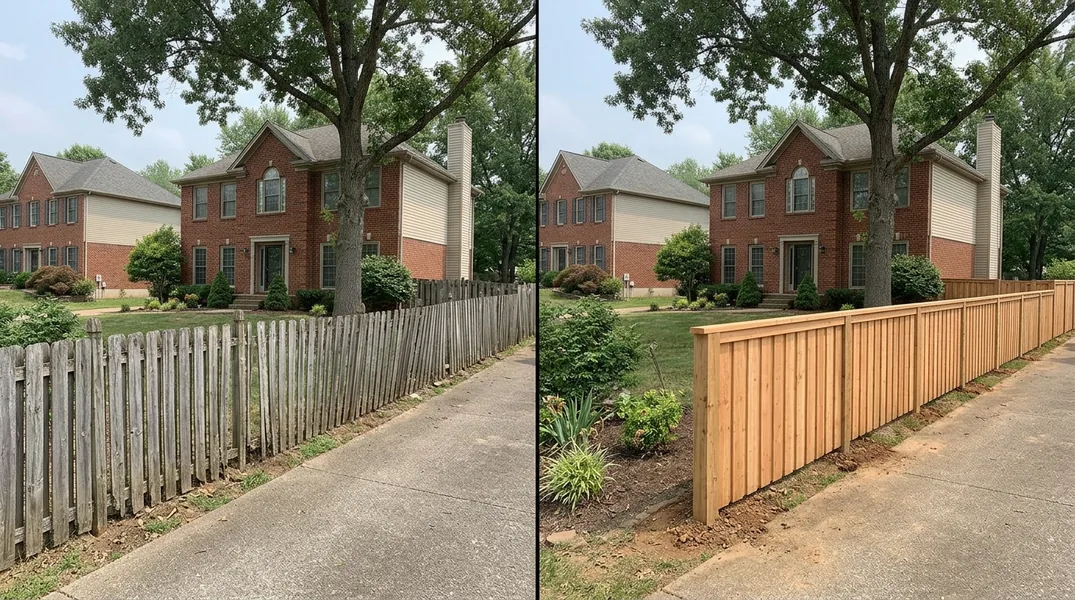
A fence with sound pickets and rails and a handful of failed posts is worth repairing. Resetting or replacing those posts saves the rest of the fence and costs far less than replacement. A fence where the posts have gone at the ground line along the whole run is at end of life. Repairing it section by section over the next five years will cost more than replacing it once. We quote both options and explain the math plainly. On rotted wood: we replace wood that has decayed at the ground line, where moisture is the cause. We do not perform termite or pest inspections, apply chemical treatments or carry out pest control, which is a separate regulated trade. If you are concerned about insects, that work belongs with a pest control specialist. Call (859) 407-6106 to have a post or fence line evaluated, or visit our fence post repair page to learn more.
Every job starts with an honest read of what is actually wrong. That is the difference between a repair that holds and money spent that does not.
Storm Damage Fence Repair in Lexington
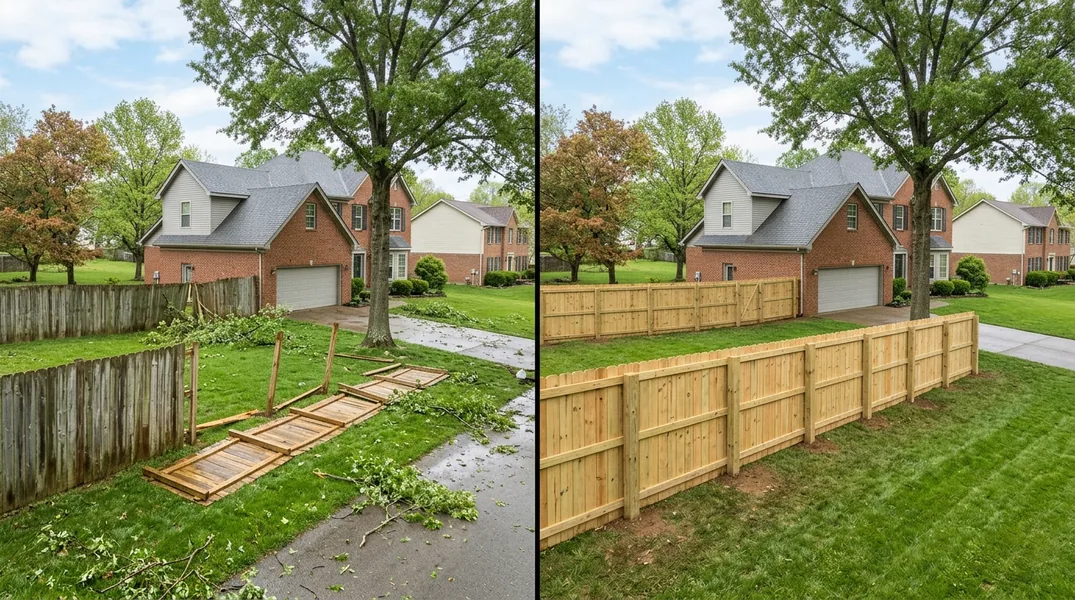
Spring and summer storms here bring straight-line wind that pushes whole runs of fence over on the same line, snaps posts at grade, and leaves panels gone or twisted. When a fence comes down in severe weather, the rebuild is an opportunity to do it better. Posts that failed once will fail again if they are simply reset in the same hole. A fence rebuilt after a storm should come back with better posts, better drainage around the footing, or both. We assess the damage, photograph it section by section, and provide a written estimate you can give to your insurance carrier if you choose to file a claim.
What we provide is documentation: a thorough look at what failed, where, and how much it costs to put right. Coverage decisions rest with your carrier, and approval depends on your policy and your deductible. We do not adjudicate claims, and we do not waive, absorb or discount any part of a deductible. If your carrier approves the work, we rebuild it. If not, we can still quote a repair or replacement at our standard pricing. Start with a storm damage assessment to understand what you are looking at.
Cedar, Pine, Vinyl or Chain Link: Choosing for This Climate
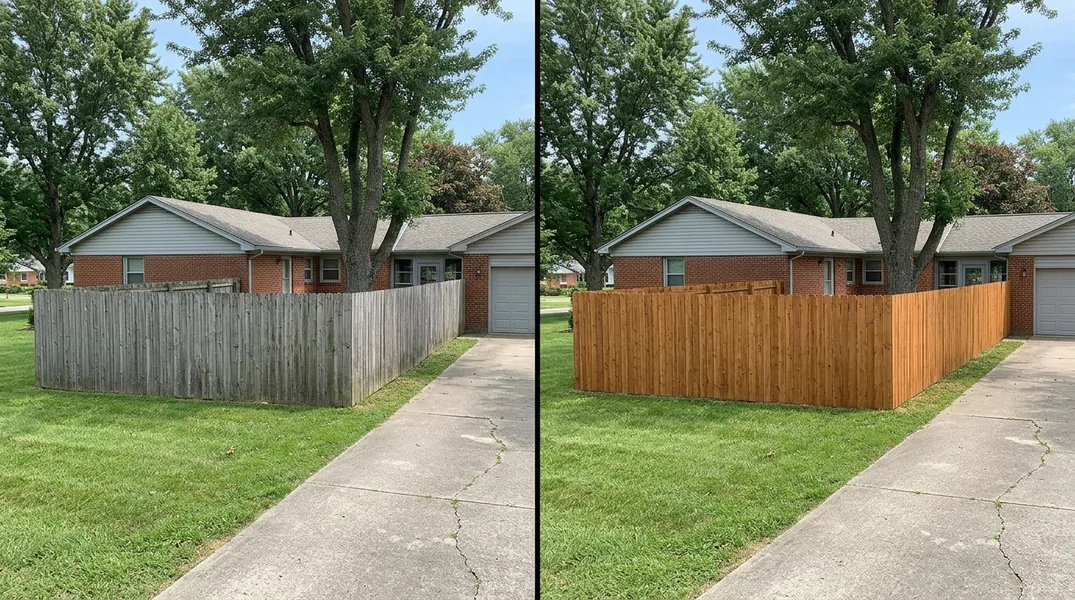
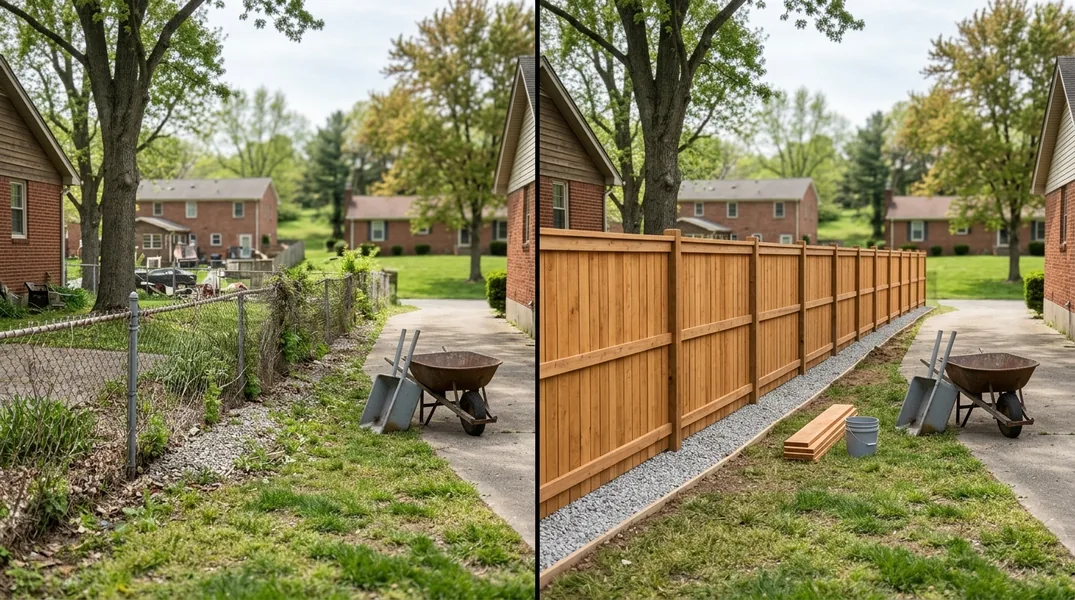
Cedar is beautiful and smells good, but it wants maintenance. Under this sun and humidity, a cedar fence needs cleaning and re-staining every two to three years to hold its color and shed water. That cycle is what decides whether it lasts closer to ten years or closer to twenty. Pressure-treated pine is tougher, holds stain better and costs less, and it is the smarter budget call for a fence that will not be stained regularly. Vinyl requires no stain or sealer and resists fading, but it does not rack to follow steep grade as smoothly as wood, and it expands and contracts with temperature, so it needs room to move. Chain link is the toughest per dollar and the easiest to repair; galvanized is the standard and holds up well, while black powder-coated looks better but costs more. Aluminum and ornamental iron suit pools and front yards where appearance matters, and both rack to follow grade better than vinyl.
The material that is right for your fence depends on your budget, how much time you want to spend maintaining it, and what your HOA or deed restrictions allow. We quote by the linear foot and measure on site, because slope, access, tear-out and gate count change the price. Get a free estimate for the material you are thinking about, and we will explain the trade-offs for your specific fence line. Read more about wood privacy fence, vinyl fence, chain link or aluminum and ornamental iron to see what fits your needs.
Permits, HOA Rules, Property Lines & Pool Barriers
Permits and height limits vary across the jurisdictions we serve. In most areas, fence height is limited to four, five or six feet depending on whether it faces a street, a property line or a rear yard, and setback from the property line may also apply. Many cities in the area require a permit before installation starts, while others do not. If you live in a master-planned community or have deed restrictions, your HOA or architectural guidelines likely govern fence height, material and color, and approval is usually needed before work begins. It is worth checking with your HOA and the local building department before you commit to a design. On property lines: we are fence contractors, not land surveyors. We install on the line you identify, working from your existing survey or plat. Determining a boundary is the regulated work of a licensed land surveyor. Confirm your line and any neighbor or association consent in writing before starting.
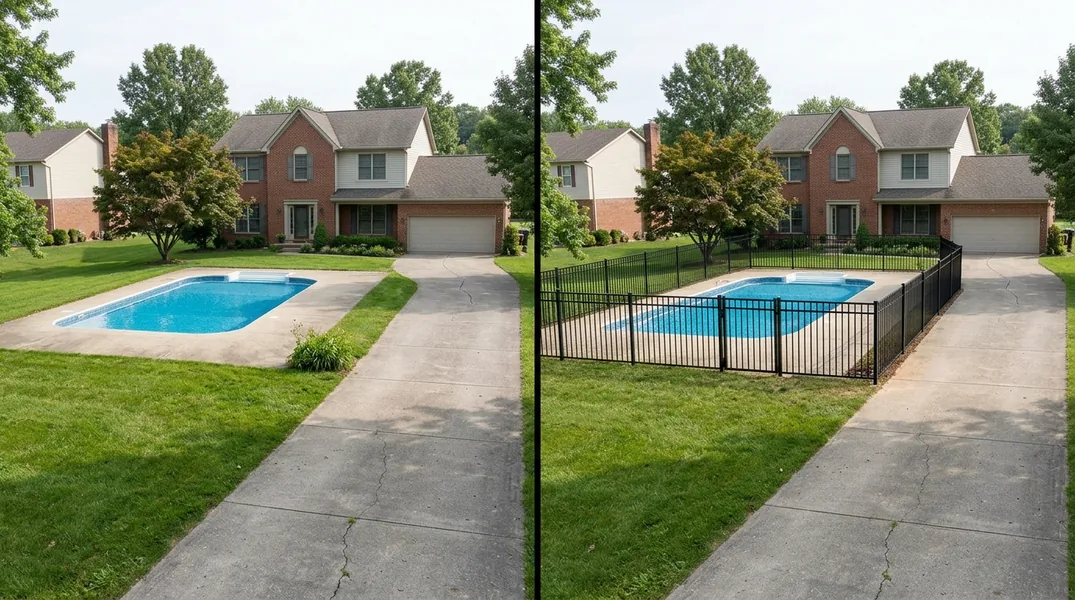
Pool barriers are installed to meet the pool barrier codes that apply at your address, with self-closing self-latching hardware on any gate. No barrier replaces supervision. Before we dig post holes, we request Kentucky 811 utility locates to mark any underground lines. Locates cover participating operators only and do not mark private lines such as irrigation or landscape lighting, so tell us if you have those on your property. Requirements vary by jurisdiction and change over time. Always verify current rules with the Lexington building department and your HOA before starting your project. Call for a free estimate and we can discuss what applies to your specific job.
Ready to get started? Lexington Fence serves in Lexington and surrounding areas. Book your free on-site estimate today.
Get Your Free Estimate