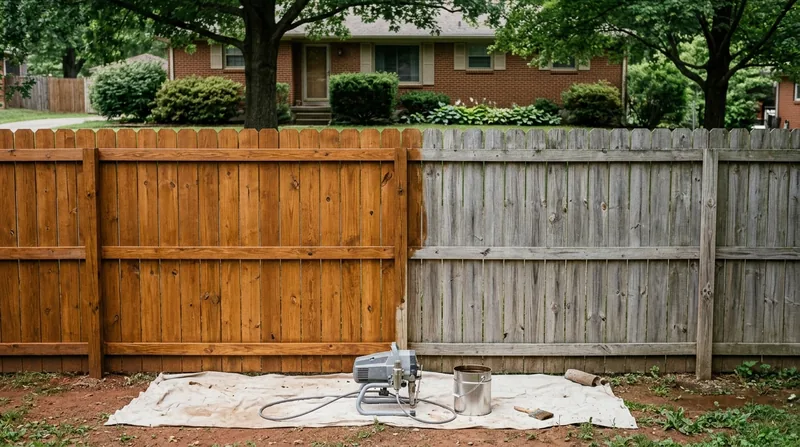




Fence staining in Lexington is the difference between a cedar fence that lasts 15 years and one that rots at the ground line in seven. The Bluegrass region's wet springs, humid summers, and freeze-thaw winters attack bare wood relentlessly. Moisture sits in the grain, freeze cycles heave the fibers apart, and rot begins at the post base where water pools against the concrete footer. A properly stained and sealed fence sheds that water, and the wood underneath stays sound. We clean the fence, brighten the grain, and seal it with a penetrating stain that protects without trapping moisture inside the wood. When staining still makes sense, it can double the life of your cedar fence. When the wood is too far gone, we tell you that too.
Why Fence Staining Matters in Lexington's Climate
Lexington sits on a gently rolling limestone plateau with thin red-brown silty clay that holds water. Spring rains soak into the fence posts, and the clay keeps it there. Summer humidity means drying happens slowly. When fall arrives and temperatures drop, that moisture freezes inside the wood, expanding and contracting with each thaw cycle. By winter, the grain splits and cracks form. A stained fence sheds water before it penetrates. Without stain, a six-foot cedar privacy fence or a board-on-board cedar fence in subdivisions like Hamburg, Masterson Station, or Beaumont loses its integrity in just a few years.
- Water penetration causes rot to begin at the ground line, where posts set in concrete are most vulnerable.
- Freeze-thaw cycles split bare wood fibers and loosen joints between rails and stringers.
- Staining seals the grain and prevents moisture from entering while allowing the wood to breathe.
- A single staining cycle can extend the life of a cedar fence by five to eight years or more.
Catching the problem early, before rot spreads into the heartwood, means staining restores value. Waiting until posts are soft means replacement is the only option.
Key info: Cedar and pressure-treated pine both benefit from staining, but cedar shows the results visibly. A freshly stained cedar fence in Chevy Chase or Ashland Park looks rich and warm for the first two years, then gradually fades to a soft grey as the stain weathers. Pressure-treated pine is less forgiving cosmetically, but staining still protects the wood underneath from rot.
For more on caring for your wood fence, see our wood and privacy fence installation page.
How We Clean, Brighten, and Seal Your Fence
The work begins with a hard look at the wood. If the surface is sound, cleaning and brightening make sense. We power-wash the fence to remove dirt, algae, and weathered grain. The wash also raises the grain slightly, opening the wood fibers so the stain penetrates evenly. After the fence dries completely, we apply a penetrating stain and sealer in a color that matches the original cedar tone or shifts it to a warmer or cooler shade, depending on your preference. The stain soaks into the wood rather than sitting on top like paint, so it does not peel or flake as it weathers.
- We inspect the fence for soft spots, cracks, and loose boards before beginning any cleaning.
- Power washing removes years of dirt, algae, and weathered surface grain.
- The wood is allowed to dry fully before staining, typically 24 to 48 hours depending on humidity.
- Penetrating stain is applied evenly with brush or sprayer, soaking into the grain without leaving a thick surface coat.
- Sealer protects against water penetration and UV damage without trapping moisture in the wood.
The entire process takes five to seven working days for a typical residential privacy fence, including drying time between steps.
Example: A 150-linear-foot cedar privacy fence in Lansdowne or Southland typically takes two days to power-wash and prepare, then one day to stain. If weather delays drying or if we discover rot in a few boards during inspection, we can patch or replace those boards while the rest of the fence is prepped, keeping the job moving without a second trip.
If you need repairs alongside staining, see our fence repair services.
| Approach | Description | Best for |
|---|---|---|
| Power wash and seal only | Fence is cleaned and brightened, then sealed with a clear or semi-transparent penetrating sealer that preserves the natural wood tone. | Cedar fences that are structurally sound but weathered grey, or homeowners who prefer a natural look. |
| Power wash and stain | Fence is cleaned, brightened, and finished with a semi-transparent or opaque wood stain in your choice of color. | Most residential privacy fences; adds color and protection while allowing wood grain to show through. |
| Board-by-board staining with repairs | Damaged or soft boards are replaced, then the entire fence is power-washed and stained for a uniform appearance. | Fences with isolated rot or damage; more labor-intensive but extends the life of the overall structure. |
| Pressure-treated pine staining | Pressure-treated wood is cleaned and sealed with a stain formulated for treated lumber, which is denser and absorbs stain differently than cedar. | Chain-link fence privacy slats, utility fencing, or budget-conscious homeowners; extends life and improves appearance. |
Fence Staining and Restoration Cost in Lexington: What to Expect
Fence staining in Lexington starts at around $950 for a typical residential privacy fence, but the real cost depends on the size of the fence, the condition of the wood, and whether repairs are needed. A 100-linear-foot cedar fence in good condition costs less than a 200-linear-foot fence with soft boards that require patching or replacement. Access matters too. A fence that runs along a steep slope or is hemmed in by mature trees takes longer to power-wash and stain safely. The species of wood also affects the price. Cedar stains more evenly and takes color better than pressure-treated pine, so a cedar fence typically costs slightly more but holds the stain longer.
Getting two or three estimates from local contractors is smart practice. Each estimate should include the cost of cleaning, brightening, staining, and any necessary board repairs. Ask whether the price covers a sealer coat and whether the contractor will return for touch-ups if the stain is uneven. Some contractors include a one-year warranty on the stain itself. Others charge extra for sealing or for replacing boards.
A typical residential privacy fence staining job takes five to seven working days from start to finish, including drying time. Larger fences or those requiring significant repairs may take longer. For a detailed pricing breakdown, visit our pricing page.
What to Look for When Hiring a Fence Contractor Near Me in Lexington
Choosing the right contractor for fence staining and restoration means checking three things: insurance, references, and honesty about when staining makes sense and when replacement is the better choice. A contractor who immediately suggests replacing a fence that can still be restored is working for the bigger ticket, not for your wallet. Conversely, a contractor who proposes staining a fence with rotted posts set in soft ground is setting you up for failure.
Verify that the contractor carries general liability and workers' compensation insurance and can provide a certificate of insurance on request. Fence licensing in Kentucky is set by county and varies across Greater Lexington, so ask your local building department whether a permit is required and whether any licensing applies. Check references from recent jobs in your neighborhood. Homeowners in Chevy Chase, Gardenside, or Nicholasville can tell you whether the work held up and whether the contractor showed up on time and cleaned up afterward.
If your fence is in an HOA community like Hamburg or Hartland, confirm that the contractor understands your architectural guidelines and can work within height and material restrictions. If your fence borders a protected tree or a historic district, ask whether a permit is required before work begins. For more on getting started, contact us for a free estimate.
Fence Staining & Restoration in Lexington: Pricing Guide
| Service | Price | Details |
|---|---|---|
| Residential privacy fence, 100-150 linear feet | Starting at $950 | Power wash, brighten, and apply penetrating stain and sealer to cedar or treated pine in good structural condition |
| Residential privacy fence, 150-250 linear feet | Starting at $1,500 | Larger fence with full cleaning, brightening, stain application, and minor board repairs if needed during inspection |
| Fence with significant repairs or board replacement | On estimate | Soft posts, rotted stringers, or multiple damaged boards require an on-site inspection to determine scope and cost |
| Pressure-treated pine or specialty wood staining | Starting at $1,100 | Treated lumber requires different stain formulation and may take longer to dry; pricing reflects material and technique differences |
| Travel within Lexington and surrounding areas | Included | No separate mileage or call-out fee for jobs in Lexington, Georgetown, Nicholasville, Winchester, Versailles, and nearby communities |
| Free estimate | No charge | Response within 24 hours at (859) 407-6106; we assess the fence, discuss staining versus replacement, and provide a written estimate |
Indicative pricing, the exact cost depends on square footage, finish, and site access. Free personalized estimate within 24h at (859) 407-6106.


