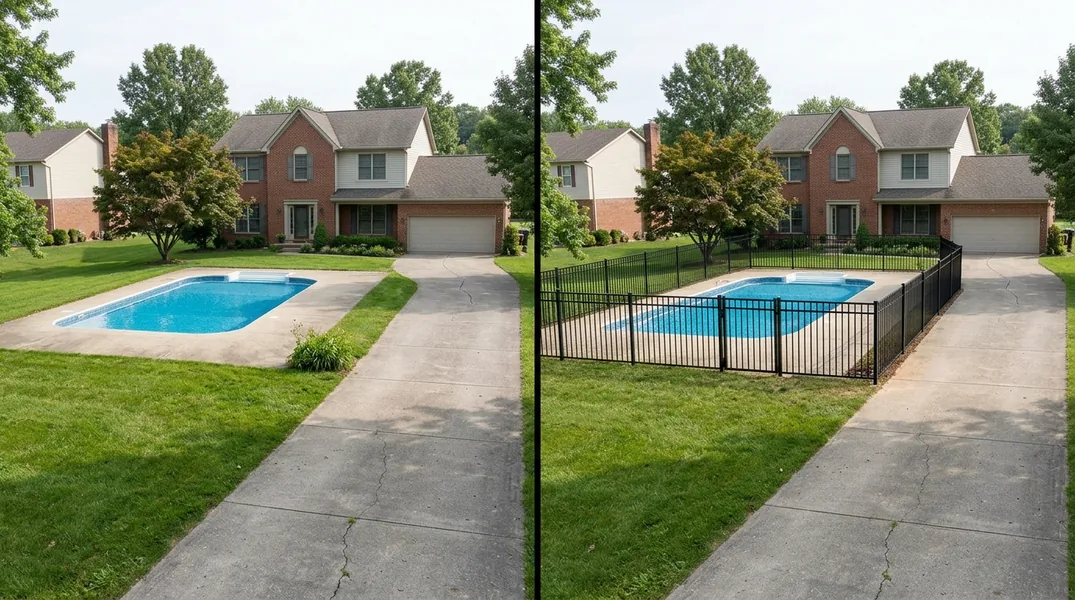
Understanding Kentucky Pool Fence Code Requirements
If you own a swimming pool in Lexington, you're responsible for maintaining safety barriers that comply with Kentucky state regulations. Pool fencing isn't just about aesthetics or privacy; it's a legal requirement designed to prevent accidental drowning, especially among young children. The Kentucky Department for Public Health has established specific guidelines that every pool owner must follow, and these requirements apply whether you have an in-ground pool, above-ground pool, or even a spa.
The primary purpose of pool fencing regulations is to create a complete barrier between unsupervised individuals and the water. This means your pool area must be enclosed on all sides, with no gaps or openings that could allow unauthorized access. Understanding these codes before you install or upgrade your pool fence is critical. Many homeowners in Lexington discover too late that their existing fence doesn't meet current standards, leading to costly modifications. By learning the requirements upfront, you can ensure your Wood & Privacy Fence Installation project meets all legal standards from day one.
Pool Fence Height Requirements in Kentucky
Kentucky law specifies that pool fencing must meet minimum height requirements to effectively prevent access. The standard requirement is that your pool fence must be at least 4 feet tall, measured from the ground level on the outside of the fence. This height requirement applies to all sides of the pool enclosure and is non-negotiable. The 4-foot minimum ensures that most children and adults cannot easily climb over or reach into the pool area, creating a meaningful barrier to accidental entry.
However, height alone isn't the only consideration. The fence must also be constructed so that there are no handholds or footholds that would make climbing easier. Horizontal rails, for example, should be spaced appropriately to prevent climbing. Additionally, the fence must be free from gaps at ground level. Many homeowners use Vinyl & PVC Fence Installation or Chain Link Fence Installation for pool areas because these materials naturally meet height requirements and can be installed without gaps. When planning your pool fence installation, verify that the contractor you choose understands these height specifications and can demonstrate compliance with local codes.
Self-Closing Pool Gate Requirements and Regulations
One of the most important components of pool fence compliance is the gate, and Kentucky regulations are strict about gate functionality. Your pool gate must be self-closing and self-latching, meaning it should automatically close and lock behind anyone who passes through it. This automatic feature is critical because it eliminates the risk of someone leaving the gate open accidentally. A self-closing pool gate works with a spring mechanism that pulls the gate closed, while a self-latching mechanism ensures the gate remains locked without requiring manual action.
The self-closing pool gate must close within 15 seconds and latch securely every single time. This is why many gates fail inspection: they may work 90 percent of the time, but if they occasionally stick open or don't latch properly, they don't meet code. The gate must also open away from the pool (not toward it), and it cannot be held open by wedges, props, or other devices. Additionally, the gate must have a latch mechanism that is at least 54 inches above the ground level, positioned so that children cannot easily reach and operate it. When you're planning your pool fence project with Lexington Fence, we ensure that every gate installation meets these exacting standards to keep your family safe and your property compliant.
Additional Barrier Options Beyond Traditional Fencing
While a traditional fence is the most common pool safety barrier, Kentucky regulations allow for alternative barrier methods that can work alone or in combination with fencing. These alternatives include removable pool covers, pool alarms, and isolation fencing around individual pool access points. Some homeowners use a combination approach: perhaps a partial fence with a removable safety cover, or Aluminum & Ornamental Iron Fencing combined with a pool alarm system. However, it's important to understand that these alternatives must meet specific performance standards and are sometimes used as supplemental protection rather than sole protection.
A removable safety cover, for example, must be able to support the weight of a child and must be properly installed and maintained. Pool alarms must detect unauthorized entry and produce an audible alarm. Isolation fencing specifically around the pool (rather than enclosing the entire yard) is also permitted, provided it meets the same height, gap, and gate requirements as perimeter fencing. If you're considering alternative barrier methods, we strongly recommend consulting with your local code enforcement office or speaking with an experienced fence contractor who understands Kentucky's specific regulations. What works in one state may not be acceptable in Kentucky, so verification is essential.
Working with a Local Contractor: What to Ask Before Installation
Before you hire anyone to install your pool fence, you should ask specific questions to ensure they understand and can comply with Kentucky pool fence code requirements. First, ask whether they have experience installing pool fencing in Kentucky and whether they're familiar with current state and local codes. Ask them to explain the height requirements, gate specifications, and gap restrictions in their own words. A qualified contractor should be able to discuss self-closing mechanisms, latch heights, and inspection procedures without hesitation. They should also be willing to provide references from previous pool fence projects and explain their quality assurance process.
Second, ask about their timeline and whether they'll obtain any necessary permits. In some cases, pool fence installation may require a permit or inspection from your local code enforcement office. A professional contractor will know whether permits are required and will factor this into their project timeline. Third, ask about pricing and whether they provide a written estimate that breaks down materials and labor. Finally, ask whether they offer a warranty on their work and what happens if the installation fails inspection. When you're ready to move forward, contact Lexington Fence at (859) 407-6106 to discuss your pool fence project with professionals who understand Kentucky requirements thoroughly.
Getting Your Pool Fence Inspected and Maintaining Compliance
After your pool fence is installed, you'll likely need to have it inspected by your local code enforcement office to verify compliance. This inspection process typically involves a visual examination of the fence height, gate operation, and overall barrier integrity. The inspector will test the self-closing gate mechanism, measure the height from multiple points, and check for gaps that could allow access. Don't view this inspection as an obstacle; it's actually a valuable service that confirms your pool is properly protected and that you're meeting your legal obligations as a pool owner.
Beyond the initial inspection, you have an ongoing responsibility to maintain your pool fence in compliant condition. This means regularly checking that your self-closing gate still functions properly, that the fence hasn't deteriorated or developed gaps, and that no debris or objects have accumulated that could serve as climbing aids. Wood fences may need annual staining or sealing, while vinyl and chain link fences require periodic cleaning and inspection. If you notice any issues, address them promptly. If you're unsure whether your existing pool fence still meets current code requirements, consider scheduling a free estimate with Lexington Fence by visiting our contact page or calling (859) 407-6106. We can evaluate your current setup and recommend any upgrades or repairs needed to ensure ongoing compliance and safety.
Looking for a professional fence contractor in Lexington? Lexington Fence responds fast for all your fence needs.
Get a Free Quote